Five musicians, zero tags:
Naostage K SYSTEM tracks
Feu! Chatterton
on tour
One K SYSTEM was deployed on the band’s tour to track five performers across the full stage at Accor Arena, enabling tag-free followspot precision for a landmark Paris performance.
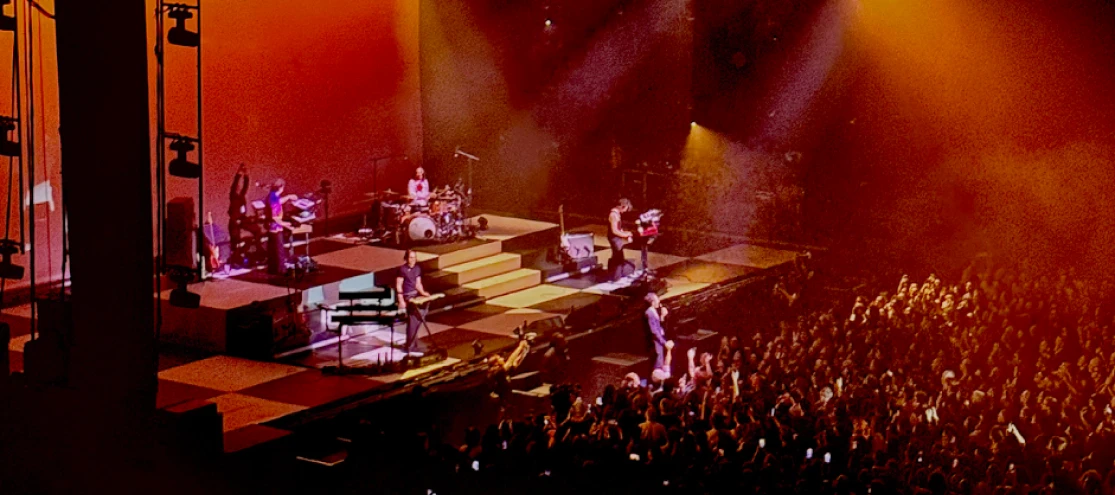
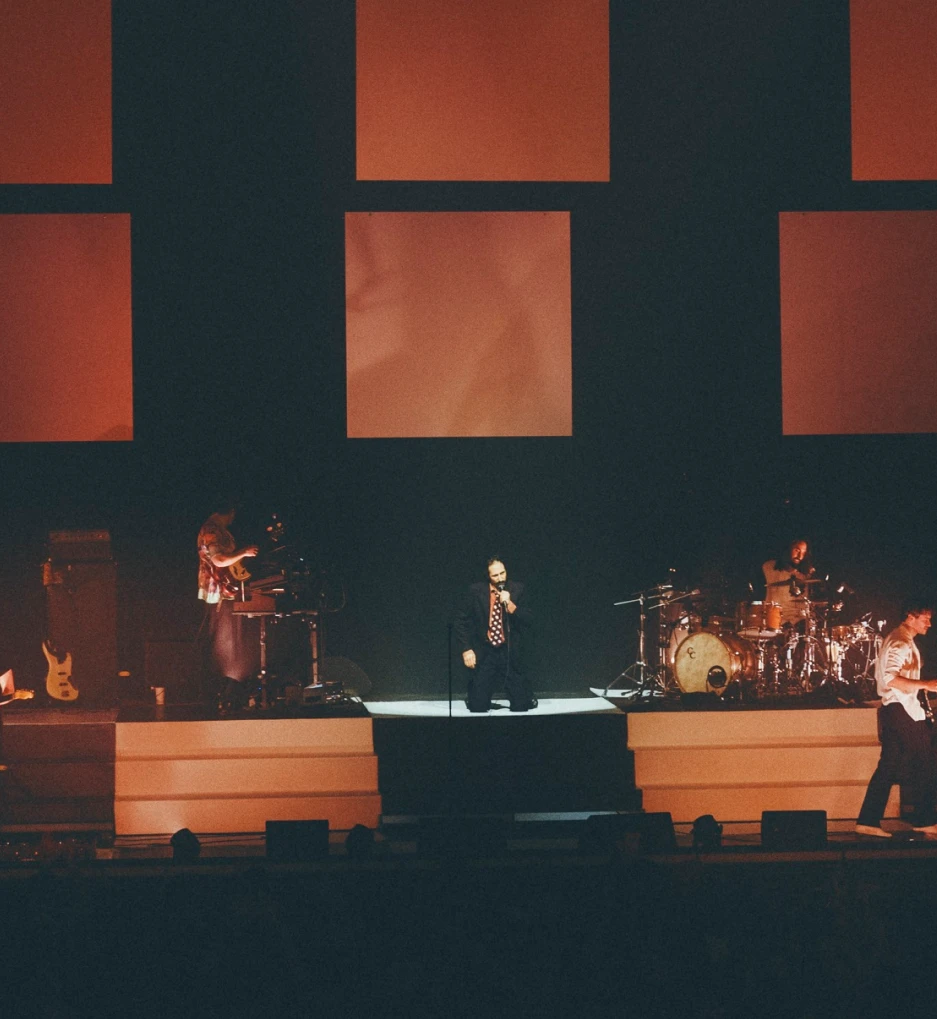
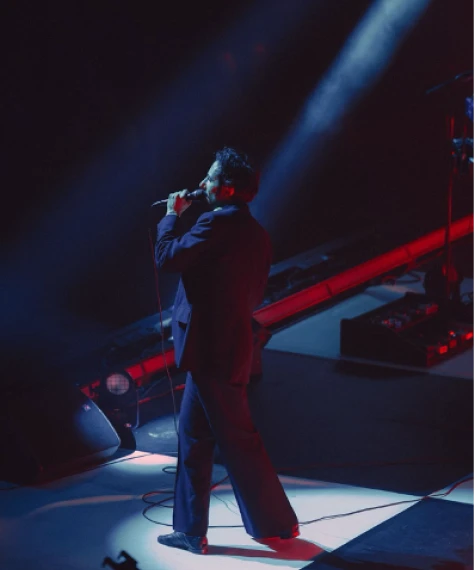
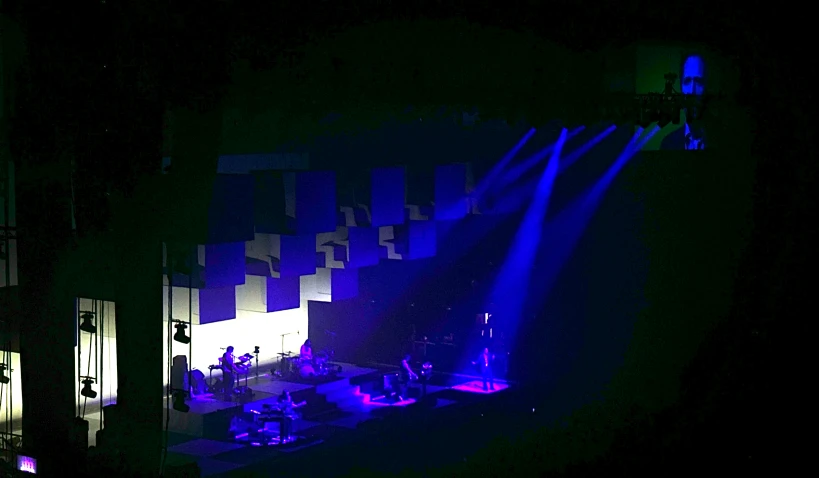
On 11 February 2026, Feu! Chatterton brought their ambitious Labyrinthe-inspired production to Accor Arena in Paris. For the show, the creative team deployed the K SYSTEM from Naostage, the company’s flagship automated tracking solution, to deliver real-time performer tracking across the entire stage without the use of beacons or wearable devices.Touring-friendly and designed for rapid setup, a single K SYSTEM installation was used to track all five members of the band throughout the performance. The system enabled lighting to follow performers seamlessly wherever they moved, ensuring consistent illumination while preserving complete artistic freedom on stage.
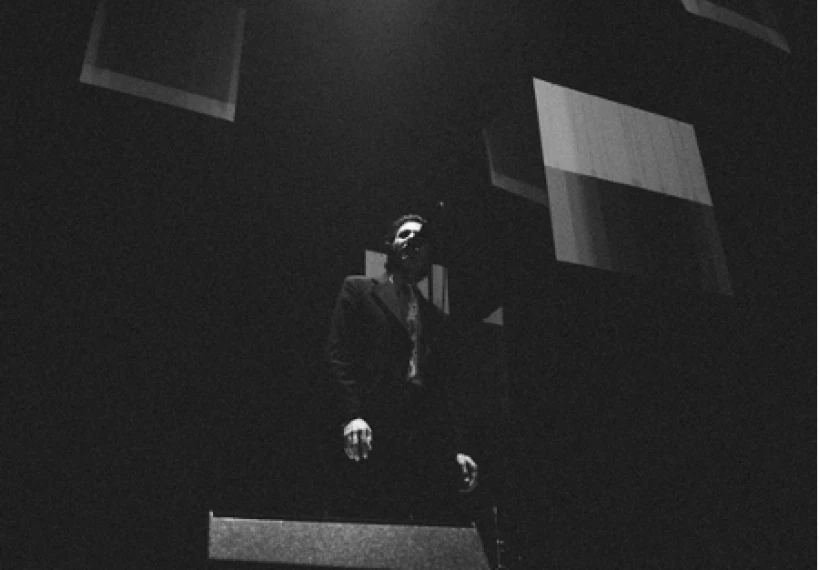
For Brion, the concept reflected the idea of a labyrinth, a journey filled with detours and obstacles that nevertheless leads towards a destination.The scenography allowed the stage to shift continuously between chaos and order, open space and confinement, while mirrored surfaces and lighting reflections created constantly evolving perspectives for the audience.
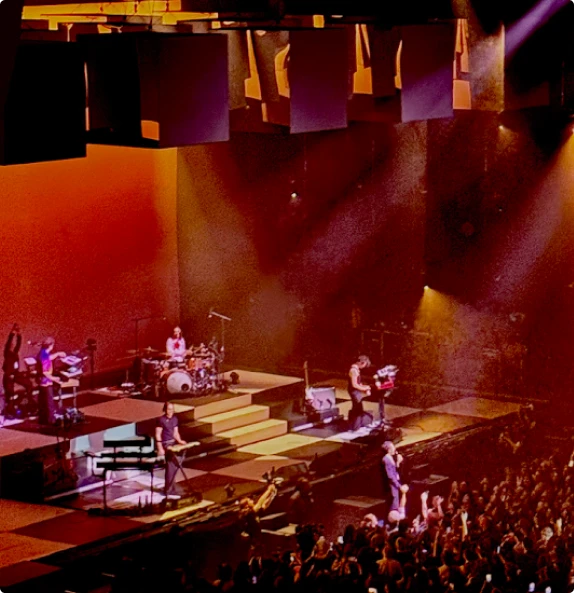
The band’s performance style also influenced the technical approach. Feu! Chatterton performs entirely live, often without a click track, meaning traditional timecode-based lighting cues were not practical. Songs evolve organically, sometimes building gradually over several minutes. This unpredictability required a lighting system capable of adapting dynamically in real time.“Using Naostage’s tracking system was an obvious choice,” says Nicolas Brion. “I wanted each musician to have one front followspot and one followspot from FOH to flatten the image and eliminate shadows. No matter where they were on stage, I could raise a fader and they would be perfectly lit. I never wanted to ask them to stand in a specific position for the lighting to work. The lighting had to adapt to them, not the other way around.” To achieve this level of flexibility, the K SYSTEM was integrated directly into the show’s lighting infrastructure. A Kapta sensor was installed on the front truss of the main stage, providing full tracking coverage across the performance area. Tracking data captured by the sensor was transmitted via a dedicated VLAN to the Kore processor located at FOH.
To ensure optimal tracking performance, the Naostage team conducted a technical study ahead of the production. The analysis defined the tracking area based on the touring stage dimensions of 18 x 10 metres and determined the optimal sensor placement within the lighting rig. A Kapta unit was positioned centrally on the front truss (LX0), approximately 8 metres from the stage with a 55° angle, ensuring full coverage of the performance area. This preparation guaranteed that the entire stage space could be tracked reliably throughout the show.
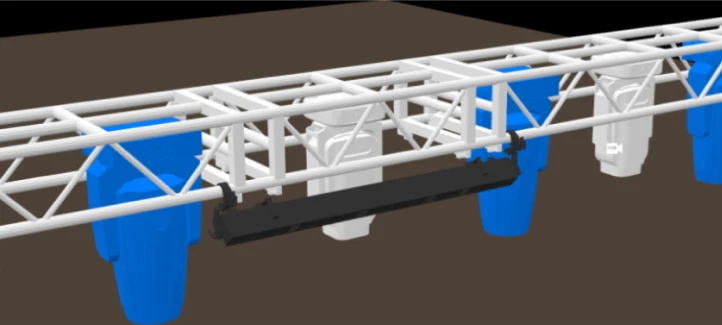
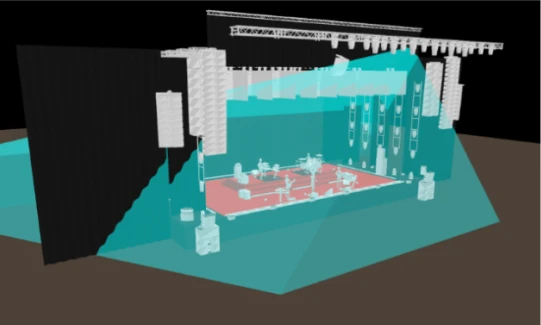
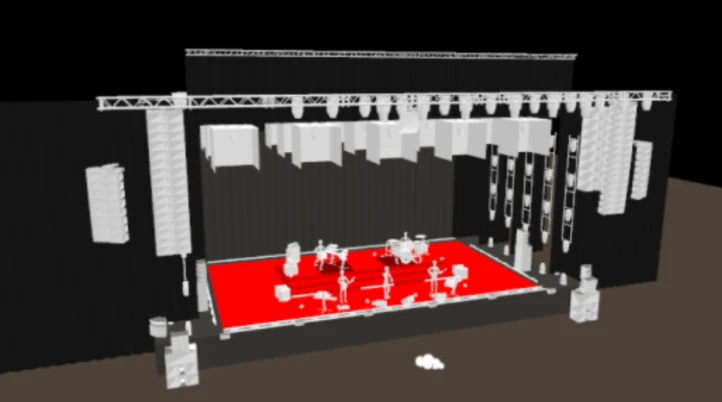
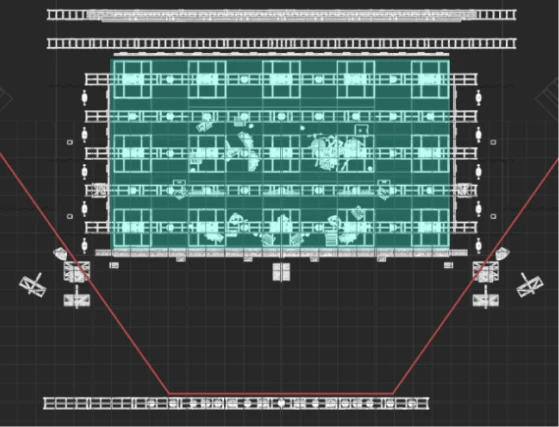
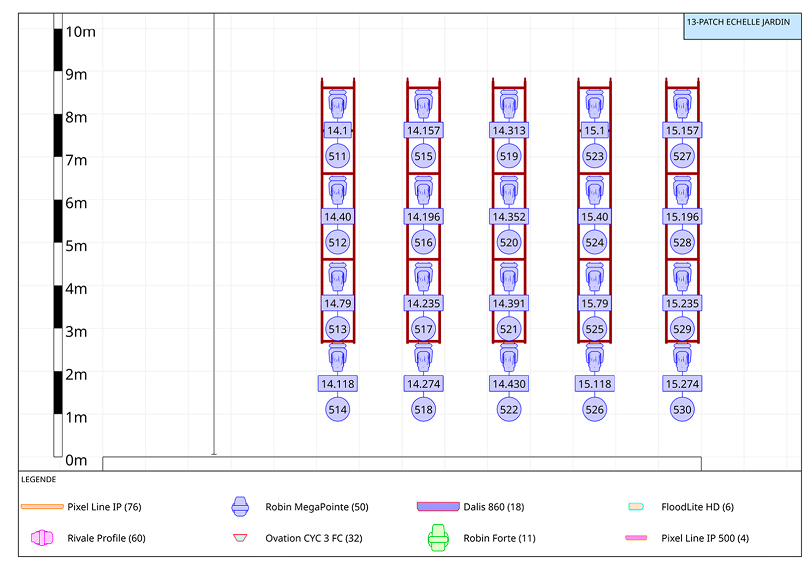
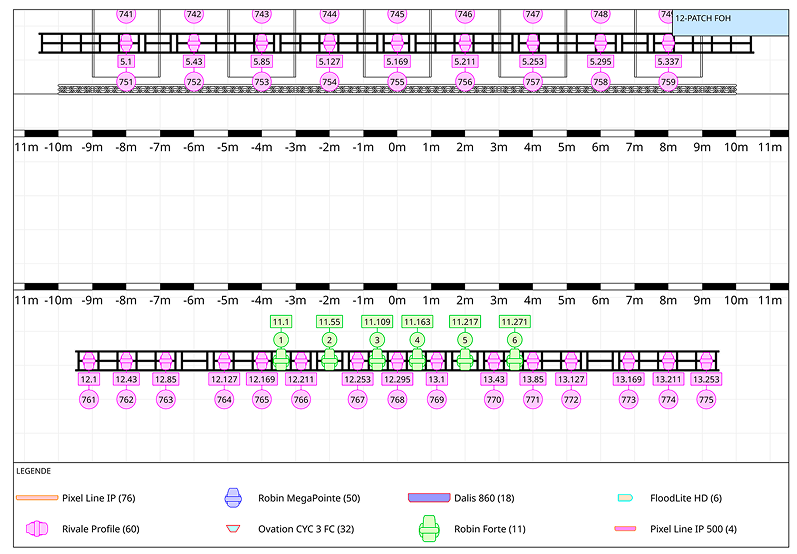
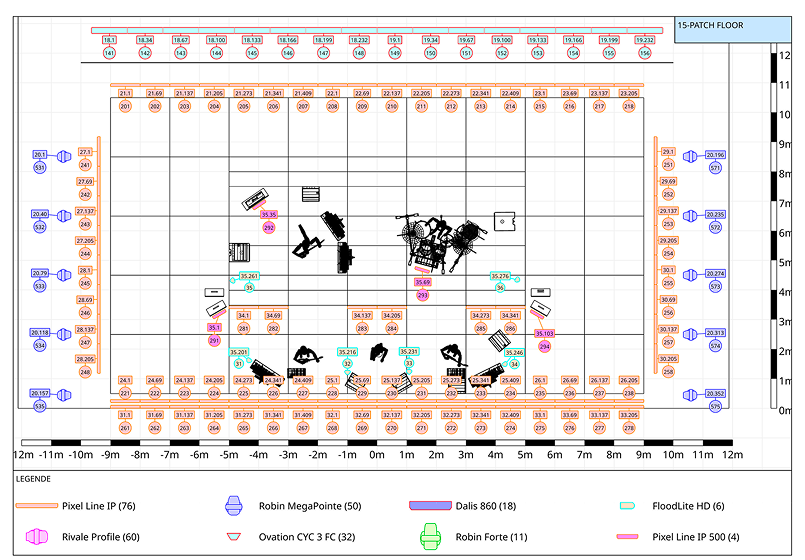
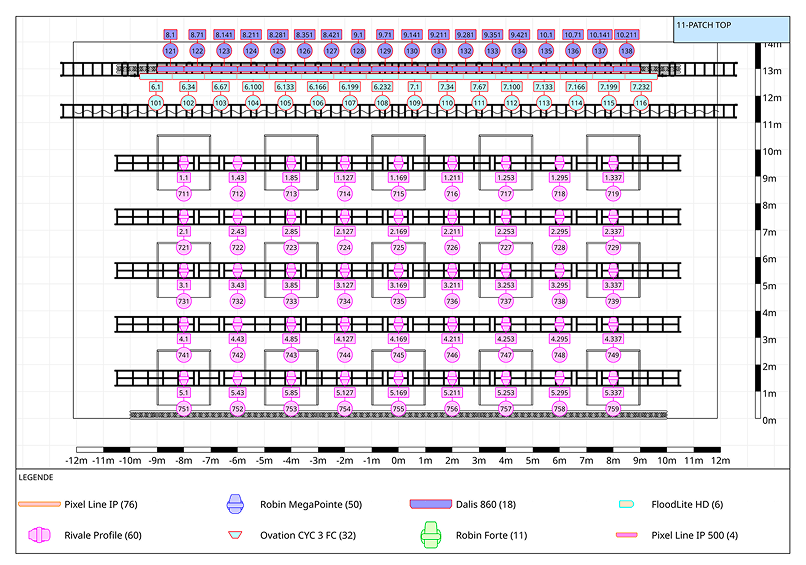
To support the real-time tracking integration, the lighting system was built around a structured stage plot defining fixture distribution, truss layout and control architecture across the full performance area. The plot reflects how the rig was organised between FOH, overhead and stage LX lines, ensuring consistent coverage and clear spatial zoning.While the technical system operates in the background, the stage plot provides the foundation that allows tracking, lighting and scenography to work together seamlessly translating real-time performer data into precise and reliable illumination across the entire stage.
The following images provide an overview of the lighting stage plot and system layout for the production.
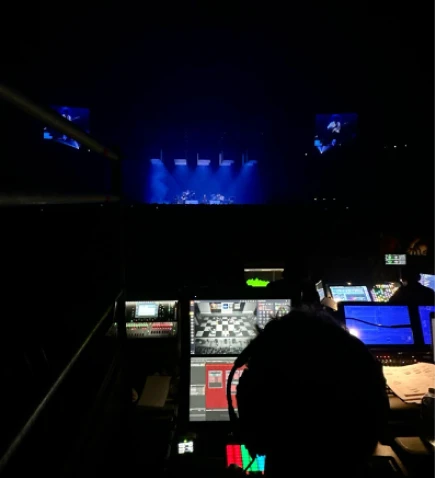
From there, tracking information was distributed through the lighting MA-Net/sACN network using PSN (PosiStageNet) data, allowing the system to communicate natively with the grandMA3 lighting console.Tracking Operator Valentin Nantas, who also served as lighting technician on the production, managed the system during the performance.“The Kapta is received over the network via a dedicated VLAN, which I then retrieve in the Kore located at FOH,” explains Valentin Nantas. “Everything is integrated quite natively, just like adding any additional stage equipment to our control setup.”Five performers were tracked throughout the show, with automated followspot control provided through ROBE Forte spot fixtures mounted on the front truss. The configuration allowed each musician to be illuminated consistently wherever they moved across the stage, without requiring manual followspot operators or restricting performer movement.
For Lighting Operator Jean-Pierre Cary, the system’s ability to track all performers simultaneously was a decisive factor in adopting the technology.
“The first time I saw the system was at a festival several years ago, and it looked promising,” says Jean-Pierre Cary. “Later, when I saw it tracking all five artists with the fixtures I wanted, simply by calibrating the system, it convinced me. When Nicolas Brion suggested we could use Naostage for this production, I immediately jumped at the opportunity.”
Beyond solving a technical challenge, the tracking system also supported the artistic philosophy behind the production. Brion deliberately avoided spotlighting a single performer, instead choosing to treat the band as a unified presence on stage. Each musician received equal lighting attention, creating intersecting beams that evoked the visual language of classic arena concerts while benefiting from modern automation and precision.For Brion, the greatest advantage of beacon-free tracking lies not in adding complexity, but in removing limitations.Beacon-free tracking does not necessarily create new creative opportunities in itself, he explains, but it removes constraints. By eliminating technical restrictions, the system allows lighting designers to focus entirely on intention and artistic expression.
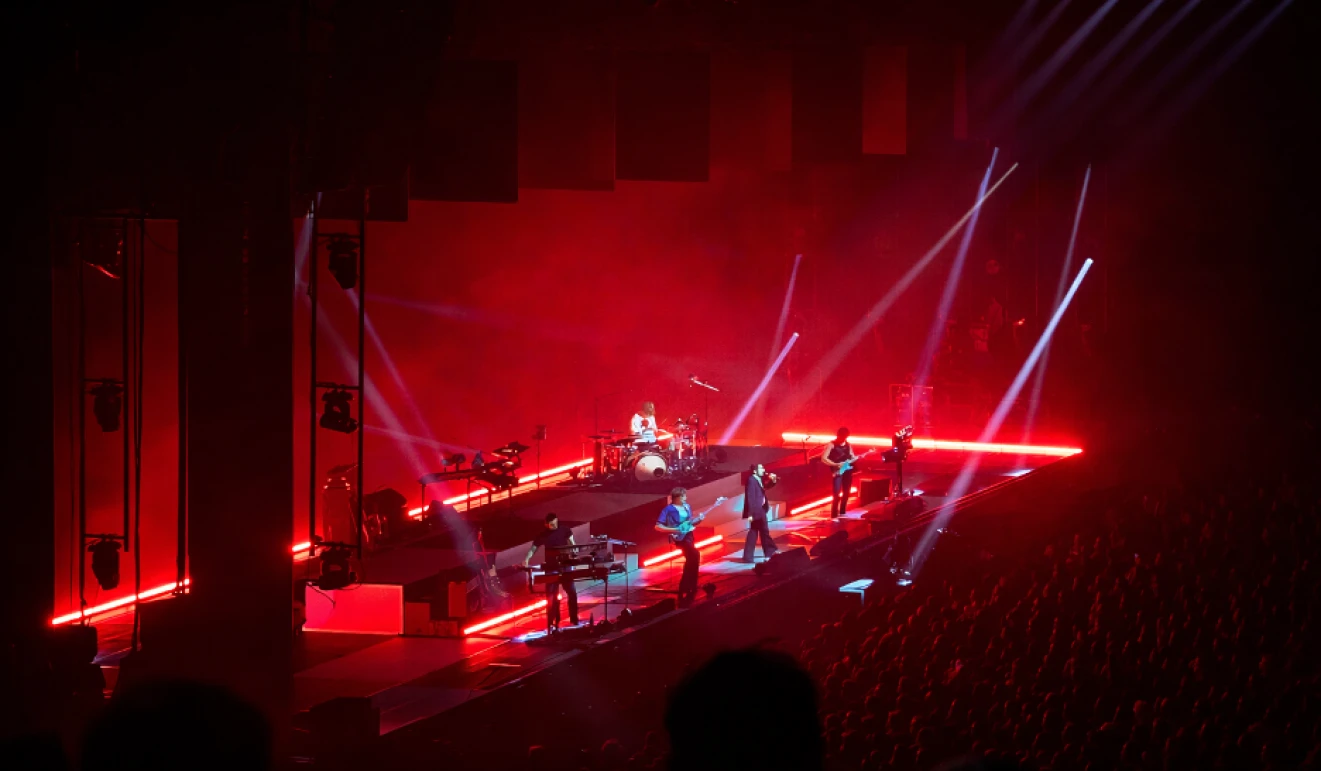
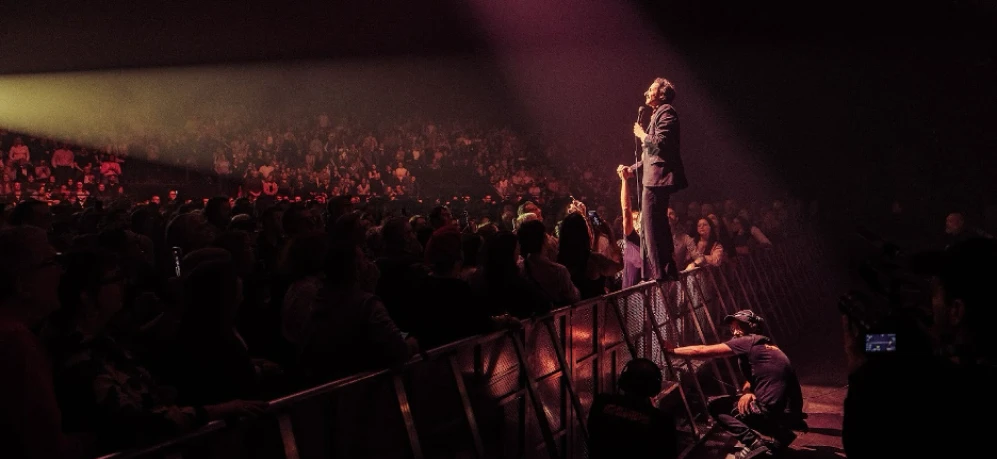
By combining real-time performer tracking with automated followspot control, the Naostage K SYSTEM allowed the production to maintain a visually cohesive lighting design while preserving the spontaneity of a fully live performance.The result was a show where technology remained largely invisible to the audience, quietly ensuring every performer stayed perfectly lit wherever the music led them.
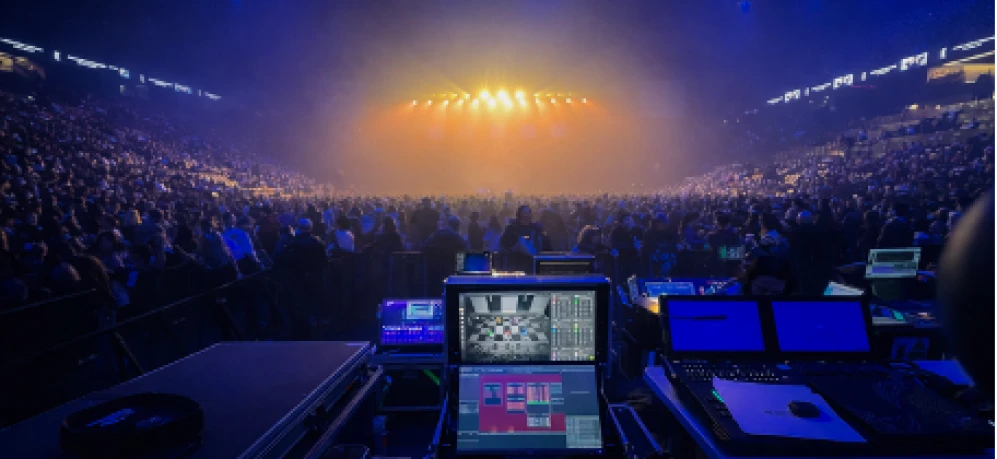
The deployment demonstrates how modern tracking technology can evolve beyond a purely technical function to become a creative enabler, allowing lighting to respond fluidly to performance rather than dictate it.